
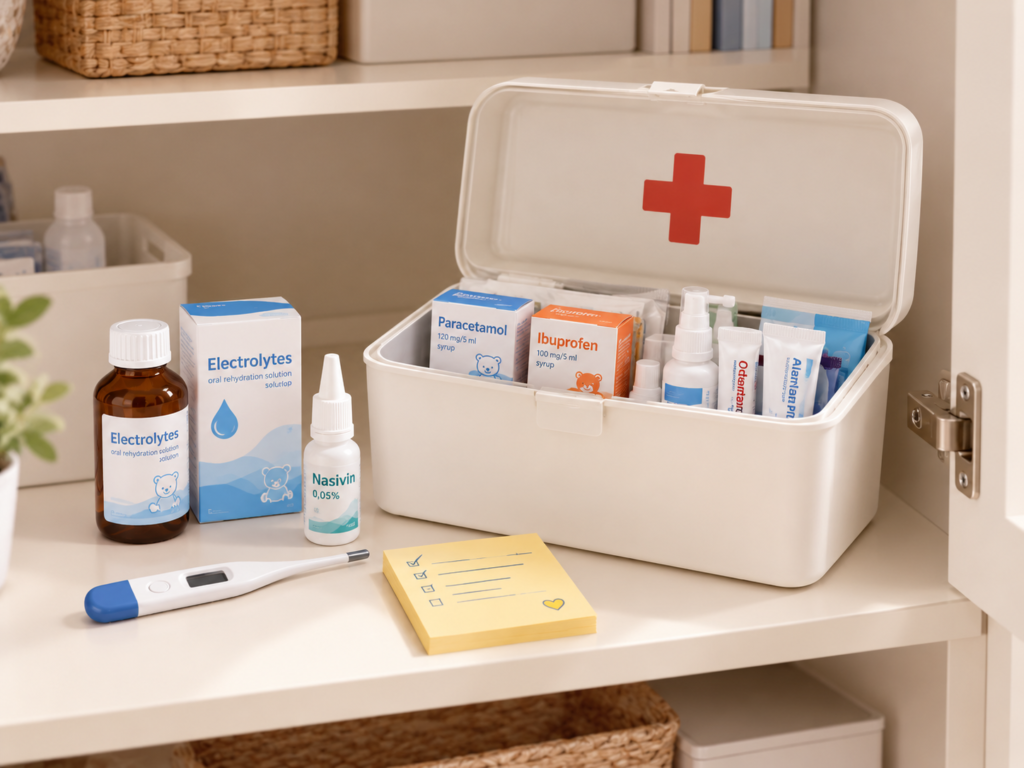
One of the most overwhelming moments of parenting is when a child suddenly becomes ill in the middle of the night.
A child who was playing happily and eating well during the day suddenly feels hot to the touch, and the numbers on the thermometer keep climbing. A blocked nose keeps them from falling asleep, or a coughing fit ends in vomiting. Things that feel manageable during the day—looking up information calmly or contacting a clinic—seem exceptionally difficult in the early hours of the morning.
- “Should I give a fever reducer now?”
- “Do we need to rush to the emergency room?”
- “Is it safe to use this medicine we already have at home?”
Over time, I realized how crucial it is to prepare in advance: knowing whether we have a fever reducer matched to our child’s current weight, which product to use for specific symptoms, and whether any of the expiration dates have passed.
Raising children in Poland means encountering unfamiliar product names at the pharmacy and often needing to compare ingredients and usage guidelines with products I was used to in Korea. That is why I decided to organize a list of the essential supplies we actually keep at home and the products that have proven most helpful when our children are unwell.
Today, I’m sharing insights from doctors that helped ease my anxiety as a parent, our approach to alternating fever reducers, and a walkthrough of the 7 essential supplies always stocked in our home medicine cabinet.
(※ Scroll down to the bottom of this post for a Quick Reference Summary Table of all the products mentioned.)
Important Notice
This article shares personal parenting experiences for general informational purposes only and does not replace professional medical advice, diagnosis, or treatment from a doctor or pharmacist. Always verify the child's age, weight, active ingredients, dosage concentration, and package leaflet before administering any medication. Always consult a healthcare professional before giving medication to infants or combining multiple medications.
1. Why a Fever Doesn’t Always Mean Rushing to the ER
(ft. Advice from Ppippoppippo 119 Dr. Ha Jeong-hoon & My Doctor Brother)
When your child’s forehead feels burning hot and the thermometer creeps toward 39°C (102.2°F), your first impulse might be to head straight to the emergency room.
However, both Dr. Ha Jeong-hoon’s 『Ppippoppippo 119 Pediatrics』 (the parenting bible in Korea) and my older brother—a doctor and father of three daughters—always emphasize the same core principle:
“A fever itself is not the disease; it is a normal immune response showing that the body is fighting off a virus or bacteria. A child’s overall condition is far more important than the exact number on the thermometer.”
Rushing to the ER late at night often causes immense stress for a child due to the unfamiliar environment, only for the staff to administer a fever reducer and observe the child for a few hours. What a feverish child needs isn’t necessarily bringing the temperature down to normal at all costs, but rather relieving their pain and discomfort while staying vigilant for warning signs.
When a child has a fever, it’s essential to look beyond the thermometer and assess their overall well-being: their responsiveness, breathing, fluid intake, and urine output. If your child is relatively comfortable and shows no red flags, you can observe them at home, offer plenty of fluids, and use an appropriate fever reducer as needed.
However, a fever of 38°C (100.4°F) or higher in an infant under 3 months old requires immediate medical evaluation. You should also seek urgent medical care without delay if your child is unusually lethargic, has difficulty breathing (gasping or wheezing), suffers a seizure, develops a non-blanching rash (a rash that doesn’t fade when pressed), or shows signs of severe dehydration. Even in the absence of obvious red flags, if your parental instinct tells you something is wrong or that your child’s condition is worsening, do not hesitate to contact a doctor. Often, a parent’s intuition can save a child’s life.
Situations Requiring Immediate ER or Medical Help
- Infants under 3 months old with a fever of 38°C (100.4°F) or higher
- Unresponsiveness or difficulty waking up; labored or rapid breathing
- Seizures or a rash that does not fade when pressed
- Severe lethargy or signs of dehydration
(※ In Poland, you can contact your local primary care clinic—POZ/przychodnia—or a pediatrician depending on the situation. In an emergency, call 112 or 999 immediately.)
2. Our Home Fever Reducers: Paracetamol & Ibuprofen
Understanding fever reducers properly was my top priority when I started raising children. In Polish pharmacies, you will mostly encounter brand names, but it is vital to form the habit of checking the active ingredients and concentrations rather than relying on brand names alone.
Here are the two main active ingredients you should know:
| Active Ingredient | Example Products in Poland | Primary Function | Key Point to Remember |
| Paracetamol (Acetaminophen) | Pedacetam, etc. | Fever & Pain relief | Dose strictly by weight & concentration (gentle on the stomach) |
| Ibuprofen | Nurofen, etc. | Fever, Inflammation & Pain relief | Check age limits, hydration status, underlying conditions, and warnings |
※ Products under the same brand name can have different formulations or concentrations. Never judge the dosage by the brand name alone. Always inform the pharmacist of your child’s age and weight to get the correct product and dosage.
Alternating Fever Reducers During High Fevers
When a child’s fever doesn’t come down or spikes again after taking medication, parents often wonder whether to give another type of fever reducer. However, routinely alternating Paracetamol and Ibuprofen at fixed intervals is not necessary or recommended for every situation.
The primary goal should be relieving the child’s discomfort using one active ingredient appropriately. If symptoms persist or return before the next allowed dose, it is best to consult a healthcare professional for guidance.
In my case, I always ask our pediatrician during visits. When necessary, I ask whether and how we should alternate medications. Typically, our pediatrician advised using Paracetamol first, and only if the child remains in distress due to a stubborn high fever, alternating Paracetamol and Ibuprofen at 4-hour intervals (e.g., Paracetamol → 4 hours later Ibuprofen → 4 hours later Paracetamol…).
Liquid Syrup vs. Suppositories (Czopki)
Liquid syrups are ideal when a child can swallow oral medication. Suppositories (Czopki) are a lifesaver when oral administration is difficult—such as when a child is vomiting, constantly spitting up medicine, or sleeping deeply through the night. Administered rectally, they absorb quickly and avoid stomach upset. Keeping both liquid syrups and suppositories organized by active ingredient offers great peace of mind during emergencies. (※ Suppository dosages also vary by age and weight, so double-check before administration.)
3. Wound Antiseptics & Skin Soothing: Octenisept & Alantan Plus
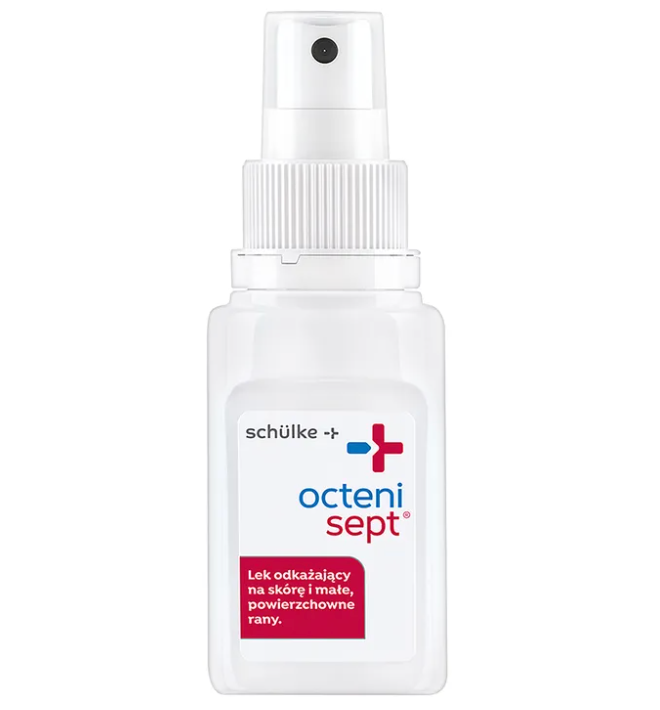
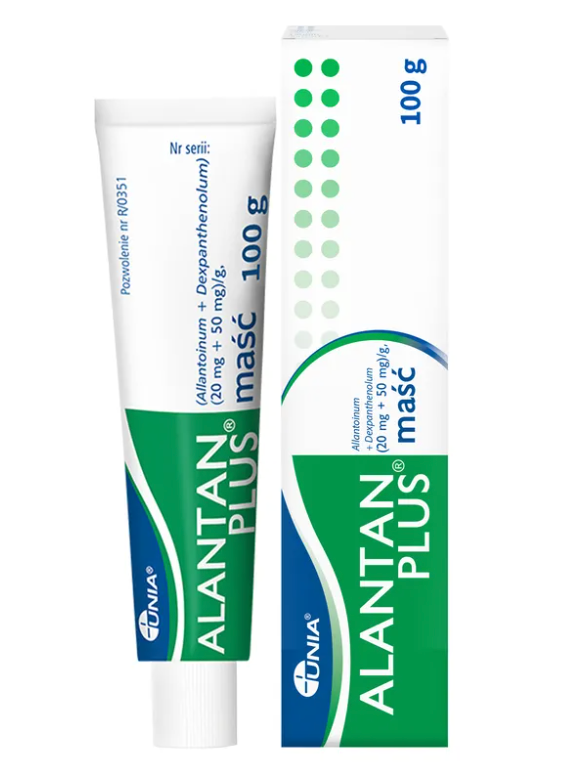
Both of these items were recommended to me by my postpartum doula (położna). They are my go-to products for umbilical cord care, diaper rash, and minor scrapes.
- Octenisept:
This alcohol-free antiseptic spray is relatively gentle and pain-free upon application. My doula recommended it for newborn umbilical cord care, and as the kids have grown, I still find it incredibly useful for disinfecting minor scrapes and surgical stitches. (Note: Manufacturers generally advise that a healthy umbilical cord can simply be kept clean and dry, and routine disinfection is usually unnecessary unless advised.)
Indications from Package Leaflet (Indications: Specific diseases or conditions for which the drug is prescribed)
– Antiseptic treatment and supportive therapy for small, superficial wounds; skin disinfection prior to non-surgical procedures
– Supportive antiseptic treatment of closed skin layers, such as post-operative sutures
– Repeated, short-term antiseptic treatment of mucous membranes and adjacent tissues prior to diagnostic or surgical procedures (oral cavity, genitalia, anus)
– Pediatric care (including umbilical cord care) and oral disinfection (e.g., irritation from braces or mouth sores)
– Short-term supportive antiseptic treatment for athlete’s foot between toes; genital and glans penis areas
- Alantan Plus:
Formulated with Dexpanthenol and Allantoin, this ointment promotes skin regeneration. Thanks to my doula’s recommendation for diaper rash prevention and treatment, I used this as a preventive barrier cream by applying a very thin layer in the skin folds instead of a regular diaper cream. Thanks to Alantan Plus, I raised all three of my children without any severe diaper rashes.
Indications from Package Leaflet
– Prevention of diaper rash in infants
– Treatment of various skin injuries including abrasions, minor cuts, and skin cracking
– Treatment of sunburns and radiation/light therapy burns
– Management of irritated and dry skin; hyperkeratosis of hands and feet
– Supportive care for atopic dermatitis, allergic eczema, rhinitis, and leg ulcers
4. Allergy & Insect Bite Care: Fenistil Gel & Krople
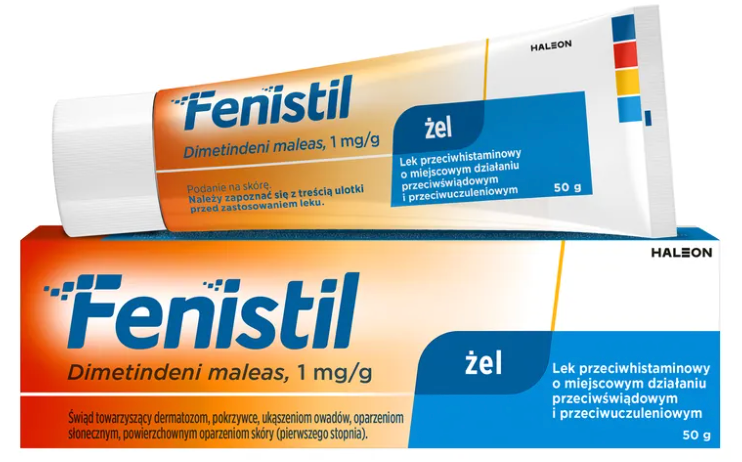
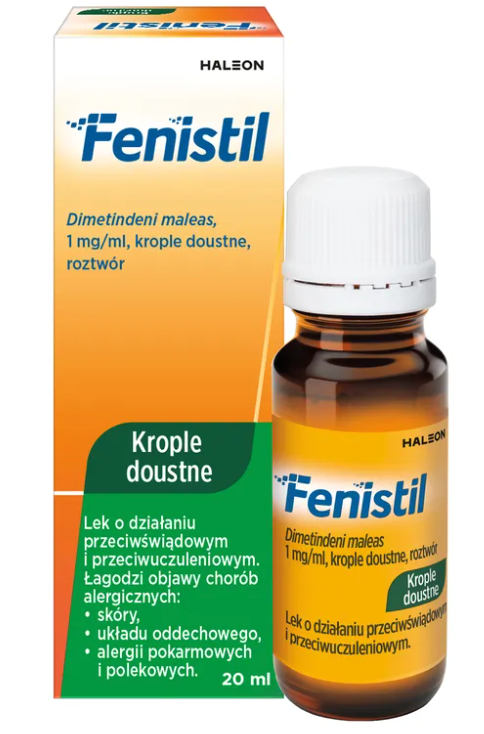
Fenistil is one of the most common products in Poland for insect bites and itchy skin. However, Fenistil Gel (topical) and Fenistil Krople (oral drops) have completely different formulations and uses, so they must be distinguished carefully.
- Fenistil Gel (Topical):
A soothing gel that helps relieve redness, swelling, and itching from mosquito or insect bites. Do not apply around the eyes, on mucous membranes, or on open wounds/broken skin (e.g., if a child has scratched a mosquito bite until it bleeds, do not use it).
Indications from Package Leaflet
– Relief of itching associated with skin dermatoses, hives, insect bites, sunburns, and superficial (1st-degree) burns
- Fenistil Krople (Oral Drops):
An oral antihistamine drop administered under the guidance of a doctor or pharmacist for hives or systemic allergic reactions.
When using for infants and young children, always verify age restrictions. (Polish guidelines state that infants aged 1 month to 1 year and children under 6 years old should use this under medical supervision.)
(※ If an insect bite triggers a severe allergic reaction/anaphylaxis—such as swelling of the lips or tongue, or difficulty breathing—do not rely on topical gels or oral drops; seek immediate emergency care.)
Indications from Package Leaflet
– Symptomatic treatment of allergic diseases:
Skin: Hives, itching from atopic dermatitis, allergic contact dermatitis, endogenous dermatitis
Respiratory: Seasonal allergic rhinitis (hay fever) and perennial allergic rhinitis
– Symptomatic treatment of food and drug allergies; relieving itchiness from infectious diseases like chickenpox
– Relieving symptoms after insect bites and preventing allergic reactions during desensitization therapy
5. Respiratory Care & Nasal Relief: Saline Water & Nasivin
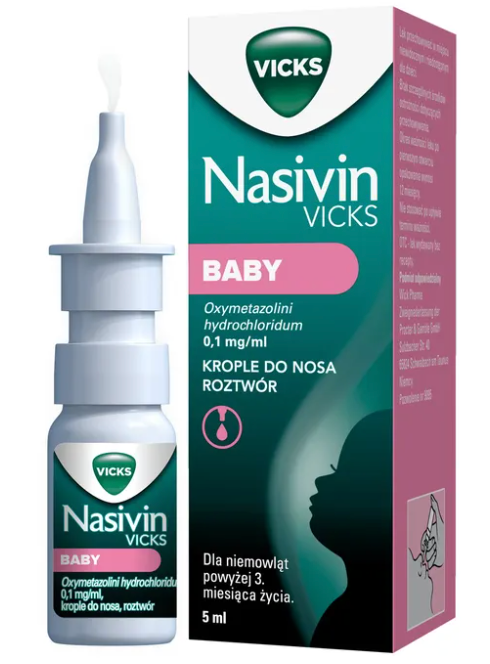
- Nasivin:
Recommended by our pediatrician for all three kids, this nasal spray provides fast relief when severe nasal congestion causes children to wake up crying at night. Administer with the child’s head tilted slightly. While it quickly shrinks swollen nasal membranes, continuous use must be limited to 5–7 days. (Product formulations vary by age group under the same brand name, so consult a doctor or pharmacist before purchasing.)
Indications from Package Leaflet
– Relief of mucosal swelling in acute rhinitis, vasomotor rhinitis, or allergic rhinitis
– Relief of mucosal swelling in sinusitis, Eustachian tube inflammation, and otitis media (middle ear infection)
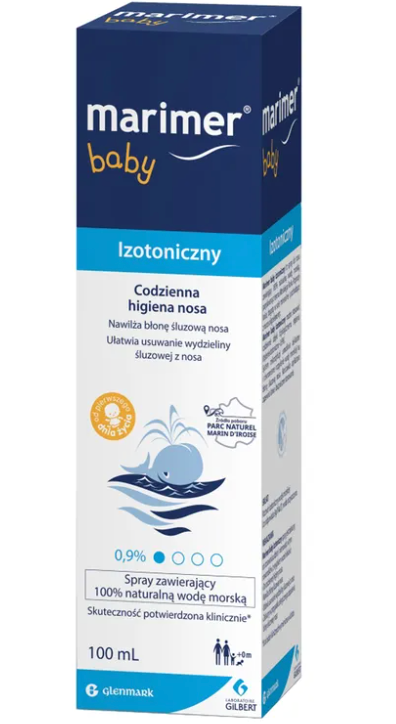
- Isotonic Seawater Spray (Woda morska / Marimer baby):
A sterile, isotonic seawater spray suitable from the very first day of life (e.g., Marimer baby). It cleanses daily nasal passages and moisturizes dry nasal membranes in infants and children. (Excludes premature infants). It can be used for daily nasal hygiene according to package instructions. I spray this morning and evening as a preventive measure whenever my children show early signs of a cold or runny nose.
Indications from Package Leaflet
– Daily nasal hygiene in infants and children, moisturizing dry nasal mucosa
– Supportive treatment for upper respiratory tract infections
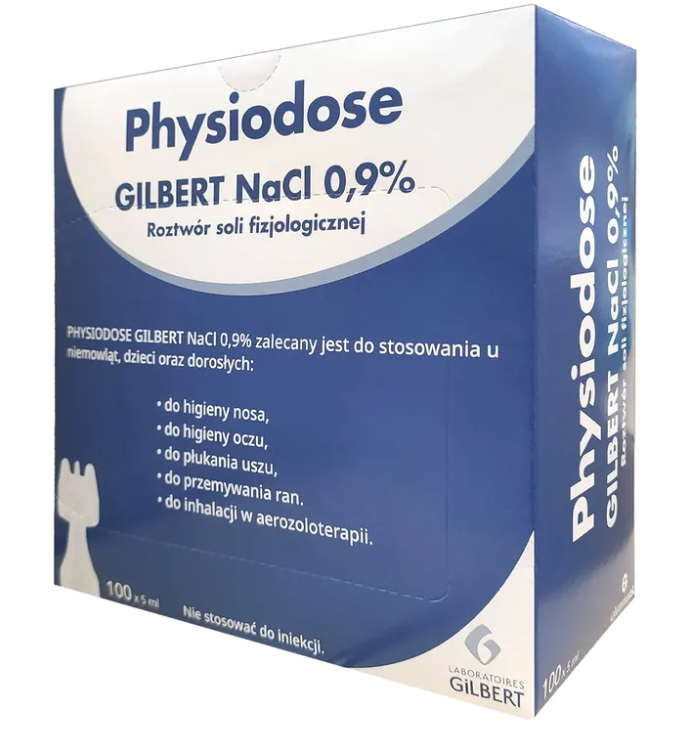
- Saline Ampoules (Sól fizjologiczna / Gilbert NaCl 0.9%)
Single-use ampoules of sterile 0.9% saline solution. Multi-purpose use for flushing noses, wiping away eye discharge, or filling nebulizers for respiratory therapy. This product (Gilbert NaCl 0.9%) is also safe from day 1 of life.
Indications from Package Leaflet
– Sterile saline in single-use ampoules suitable for infants, children, and adults for: rinsing and cleansing dry or blocked noses, eye wash/cleansing, ear cleansing, wound rinsing, and inhalation in aerosol therapy.
6. [Bonus Tip] Oral Rehydration Solution for Stomach Flu (Elektrolity)
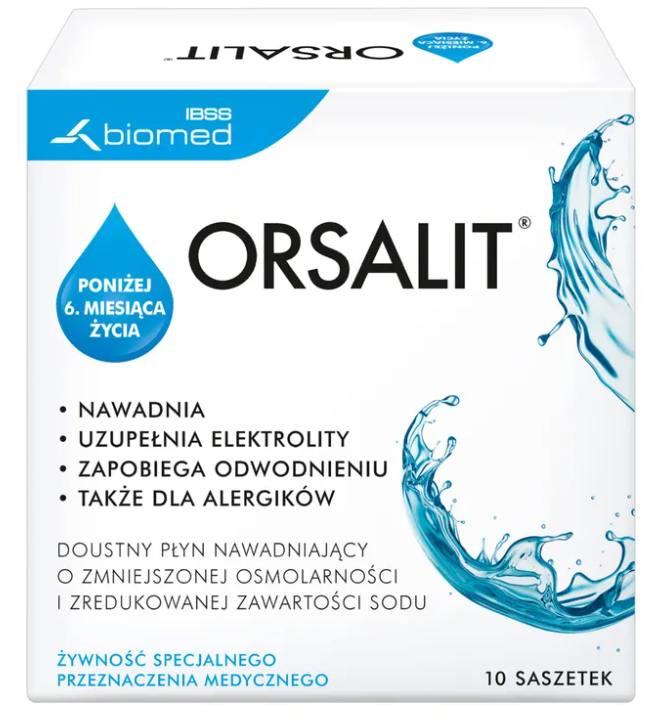
When kids start daycare or preschool, stomach flu (vomiting and diarrhea) is almost inevitable. The biggest concern during a stomach bug is dehydration. Instead of plain water, offering small, frequent sips of an pediatric electrolyte solution (such as Orsalit or Acidolit) dissolved in water is a safe and effective way to prevent dehydration.
Medicine Cabinet Management Tips
- Always read the leaflet before use: Check dosage instructions, shelf life after opening (some syrups last only 1 month after opening), and storage conditions (e.g., whether refrigeration is required).
- Use Google Translate: If reading Polish leaflets is challenging, search the exact product name on Google to read translated product descriptions from Polish pharmacy websites.
- Write the opening date on the box: Always write the date you opened the package or bottle with a permanent marker to prevent using expired medication.
- Note down weight-based dosages: Write down your child’s current weight and corresponding fever reducer dosage (in ml) on a Post-it note and stick it inside your medicine cabinet. This saves precious time during late-night emergencies.
[Quick Reference] Family Medicine Cabinet Summary Table
Here is a handy summary table covering all 7 essential home care supplies discussed in this post:
| Category | Product / Active Ingredient | Form | Primary Indications & Purpose | Key Precautions |
| Fever & Pain | Paracetamol (e.g., Pedacetam) | Syrup / Suppository (czopki) | Fever reduction, pain relief | Dose strictly by weight; can be given on an empty stomach (4–6 hr interval) |
| Fever & Inflammation | Ibuprofen (e.g., Nurofen) | Syrup / Suppository (czopki) | Fever, pain relief, inflammation | Take after meals; use caution if dehydrated (6–8 hr interval) |
| Antiseptic | Octenisept | Alcohol-free Spray | Umbilical cord, abrasions, surgical suture disinfection | Pain-free spray; safe for skin and mucous membranes |
| Skin Soothing | Alantan Plus | Ointment (maść) | Diaper rash prevention/treatment, dry skin, abrasions | Contains Dexpanthenol; apply a thin layer for prevention |
| Itch & Allergy (Topical) | Fenistil Gel | Topical Gel | Insect bites, hives, localized itch relief | Do not use on broken skin, open wounds, eyes, or mucous membranes |
| Itch & Allergy (Oral) | Fenistil Krople | Oral Drops | Systemic allergies, hives, chickenpox itching | Requires medical/pharmacist guidance; check age limits |
| Nasal Congestion | Nasivin | Nasal Spray | Acute nasal congestion, rhinitis, sinusitis | Choose age-appropriate version; limit use to 5–7 consecutive days |
| Nasal Care & Hygiene | Marimer Baby (Seawater) | Nasal Spray | Daily nasal cleansing, dry nose hydration | Suitable from Day 1; safe for daily long-term hygiene |
| Nebulizer & Cleansing | Sól fizjologiczna (Saline) | Ampoule | Respiratory inhalation therapy, eye/nose wash | Single-use sterile ampoules; suitable for nebulizers |
| Dehydration Care | Elektrolity (e.g., Orsalit) | Powder (Dissolve in water) | Preventing dehydration during stomach flu (vomiting/diarrhea) | Offer in small, frequent sips instead of plain water |
Final Thoughts
The goal isn’t hoarding as many medications as possible, but rather being prepared to use the right products safely when needed.
We can’t predict every illness our children might face, but knowing what to check when a high fever strikes or a nose gets blocked in the middle of the night allows us to respond with calm and confidence.
If you’re raising children in Poland, don’t forget to keep your local POZ clinic (przychodnia) contacts, nearby healthcare facilities, after-hours/weekend clinic info, and emergency room locations written down and easily accessible.