
Living in Poland, I’ve come to realize just how many stories a person’s name can tell. Names change depending on how they are used in a sentence, and a husband and wife may even have different endings to their surnames. There is a special day to celebrate your name in addition to your birthday, and there are rules parents need to know when choosing a name for their child.
In Part 1, I talked about how Polish names can sound unfamiliar and amusing to Korean ears. We explored the culture of nicknames, where Anna becomes Ania and Monika becomes Monia, as well as common Polish first names and surnames and the challenges of choosing a name for a child in an international family.
If you haven’t read Part 1 yet, feel free to start there.
In this second part, I’d like to look at Polish names from a slightly different perspective: how names change within sentences, why men and women may have different surname endings, what imieniny (name days) are, and what rules apply when naming a child. Let’s explore the language and culture hidden in Polish names, one topic at a time.
1. Why Does a Name Keep Changing? Polish Declension and the Confusion It Causes for Foreigners
One of the most confusing moments for foreigners who have just arrived in Poland is hearing the name of someone they know well, only to find that the ending keeps changing depending on the sentence.
Polish has a well-developed system of grammatical declension (deklinacja), in which nouns—including people’s names—change their endings depending on their grammatical role in a sentence. Korean, by contrast, often expresses these relationships by adding particles after a name. For example, in Korean, the name Anna stays the same in expressions equivalent to “Anna is here,” “I see Anna,” and “I gave it to Anna.” Only the particles change.
Here is how the Polish name Anna changes depending on its grammatical case:
- Anna (nominative): Anna jest dziewczyną. — Anna is a girl.
- Anny (genitive): Nie ma Anny w domu. — Anna isn’t at home.
- Annie (dative): Daję książkę Annie. — I’m giving a book to Anna.
- Annę (accusative): Widzę Annę w parku. — I see Anna in the park.
- Anną (instrumental): Idę do kina z Anną. — I’m going to the cinema with Anna.
Not every name follows exactly the same pattern. The rules depend on the name’s ending, gender, and form. Surnames can change in similar ways, too. When learning Polish, you eventually realize that memorizing someone’s name and learning all its grammatical forms are two separate tasks.
When I first learned a Polish name, I thought I had it memorized. Then I heard it in a sentence with a different ending and felt as though I’d met an entirely new person. A language where even names come with grammar attached is certainly not for the faint-hearted!
2. Married, but with Different Surname Endings? The Secret of -ski and -ska
When you’re introduced to a Polish couple or family, you might notice that their surnames have different endings and wonder, “Wait, are they married? Why are their surnames different?”
- Wife: Kowalska / Wiśniewska
- Husband: Kowalski / Wiśniewski
This has to do with Polish grammar. Surnames ending in -ski have traditionally behaved like adjectives, with distinct masculine and feminine forms. So Kowalski, used for a man, and Kowalska, used for a woman, are not necessarily surnames belonging to two different families. They can be the masculine and feminine forms of the same surname.
However, not all Polish surnames change in this way. Some, such as Nowak, have the same form for men and women. So if a Polish couple has different surname endings, it doesn’t mean they belong to different families.
In Korea, married couples generally keep their own surnames, and surname forms do not change according to gender. That makes this feature of Polish naming conventions particularly unfamiliar to Koreans.
3. Making Words Cute and Small: More Than Just Nicknames
In Part 1, I talked about Polish nicknames, but this culture of diminutives and affectionate forms, known as zdrobnienia, goes far beyond people’s names. Polish has a rich system of word formation that allows people to make everyday objects, common words, and even adjectives sound smaller, cuter, or more affectionate.
These are expressions you’ll hear quite naturally in everyday life with Polish speakers.
- Coffee (kawa): kawka — a cute, casual way to refer to a cup of coffee.
- Tea (herbata): herbatka — a warmer, more affectionate way to refer to tea.
- Soft (miękki): mięciutki — extra soft, fluffy, or cuddly.
- Doughnut (pączek): pączuś — a more endearing way to refer to a doughnut.
Adding endings such as -ka, -ek, -uś, or -utki can make a word sound more affectionate. It’s a lovely feature of Polish that reflects warmth, familiarity, and fondness toward the person or thing being described.
When this process is applied to names, the results resemble the nicknames we looked at in Part 1. For example, Piotr can become Piotrek, while Jan can become Janek.
These affectionate forms are often used for children when they are young. As they grow up, people may switch to their full names, Piotr or Jan, in more formal or social settings.
Even as adults, some people may still be called Piotrek or Janek by their parents, grandparents, or childhood friends they have known for years.
So here’s something worth keeping in mind: casually calling an adult Pole by a nickname associated with childhood can sometimes come across as overly familiar or even disrespectful. It’s best to pay attention to how the person introduces themselves and how others address them.
4. A Day That Can Be as Important as a Birthday: Imieniny, or Name Day
In Korea, birthdays are the most familiar personal celebrations. In Poland, however, there’s another special day people may celebrate in addition to their birthday: imieniny, or a name day.
A name day is a date associated with a particular name on the calendar. Traditionally, the custom is linked to Catholic saints’ feast days. If you buy a Polish calendar, you’ll often find people’s names printed in small letters alongside the dates. If your name appears on a particular day, you can celebrate your name day then.
Some names appear on the calendar more than once a year. In those cases, people usually choose one specific date to celebrate, often the one closest to their birthday.
In Poland, a name day can be celebrated almost like a “second birthday.” Among older generations and in some workplace cultures, people may even pay more attention to name days than to actual birthdays (urodziny).
Imagine working in a Polish office. Someone checks the calendar and announces, “Oh, today is Marcin’s name day!” Colleagues might bring him flowers or chocolates, while Marcin brings a cake or some snacks to share with everyone.
It’s a small but heartwarming tradition that gives people a chance to remember and celebrate one another. How important name days are varies by generation, region, and individual, but the custom has been part of Polish life for a long time.
If you want to wish someone a happy name day, you can say:
Wszystkiego najlepszego z okazji imienin!
It means, “Happy name day!”
For Koreans, this tradition may seem a little unusual. A birthday celebrates the day you were born, while a name day celebrates the name you have. I find it fascinating that, in Poland, there can be a special day to celebrate not only your birth but also your name.
5. “Grzegorz Is Greg?” English-Friendly Names for International Situations
Polish names often contain letter combinations such as rz, sz, cz, ź, and ż. For foreigners encountering them for the first time, even figuring out how to pronounce them can feel like an impossible task.
There’s even a famous Polish name that has become an internet meme thanks to a scene from a movie: Grzegorz Brzęczyszczykiewicz. With its seemingly endless string of consonants, it’s the kind of name that Poles themselves sometimes joke is designed to torture foreigners.
In real life, Polish friends are often well aware that foreigners may struggle to pronounce their names. So, in international workplaces or when talking to foreign friends, some help things along by offering an English-friendly nickname.
- Grzegorz → “Just call me Greg!”
- Krzysztof → “You can call me Chris.”
- Zbigniew → “Zibi is easier.”
- Piotr → “Think of it as Peter in English.”
Of course, these names don’t always become official English names. Some people keep their original names and use an informal nickname only in certain situations, while others prefer to be addressed by their Polish names, even by foreigners.
From the speaker’s perspective, using a name that’s easier to pronounce may feel like a considerate gesture. But for the person whose name it is, hearing their actual name pronounced correctly can feel even more respectful.
The same thing happens in Korea. Some Koreans use English names when living abroad because explaining a long Korean name or repeatedly correcting its pronunciation can become tiring. Others introduce themselves using their Korean names and ask people to learn how to pronounce them.
There’s no single right answer. What matters most, I think, is asking people what they prefer to be called.
If Polish names seem difficult, don’t feel pressured to pronounce them perfectly right away. Try saying them slowly, and if you’re unsure, simply ask the person how to pronounce their name. The effort to remember someone’s name and say it properly is already a great starting point for meaningful communication.
6. Does Poland Have Retro Names Like Young-sook and Soon-ja in Korea?
In Korea, some names immediately bring a particular generation to mind. Certain names are commonly associated with our parents’ generation, while others sound like the names of our grandparents. And sometimes, names that once seemed old-fashioned or unfashionable come back into style and start to sound chic again.
Just as naming trends change across generations in Korea, Poland also has traditional names that are strongly associated with older generations.
Names such as Krystyna, Halina, Jadwiga, Stanisław, and Mieczysław have a long history and are often perceived as classic, old-fashioned Polish names.
The interesting thing is that some of these retro names have been making a comeback among younger parents. Look at recent rankings of popular baby names in Poland, and you’ll find classic names such as Zofia, Hanna, Antoni, Franciszek, and Jan near the top.
It seems the saying “fashion always comes back around” applies to Polish names, too.
If you hear a Polish name and wonder, “Is that still a popular name for babies these days?”, checking the latest baby-name rankings can be a fun way to find out. Naming trends offer a little glimpse into a country’s changing tastes and sense of style.
7. Can Parents Name Their Baby Anything They Want? Birth Registration and Naming Rules
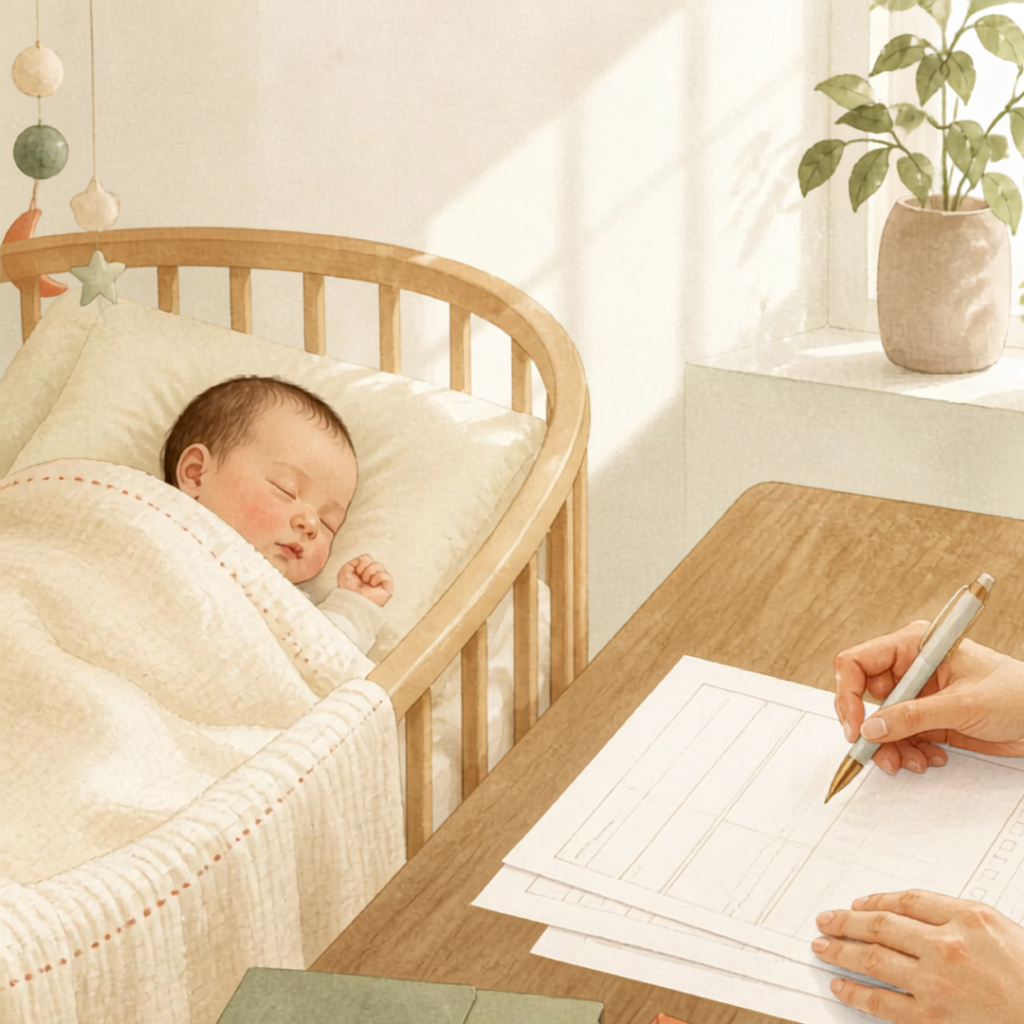
In Korea, parents have considerable freedom to choose a name using their preferred Chinese characters or native Korean words. In Poland, however, registering a baby’s name involves rules administered by the civil registry office, known as the USC (Urząd Stanu Cywilnego), as well as guidance on language and naming conventions.
Here are some of the key rules:
- A child can be registered with up to two given names.
- Names that are offensive or likely to expose a child to ridicule are not permitted.
- Diminutives or pet-name forms cannot simply be registered as a child’s official name in place of a proper given name.
- Foreign names can also be chosen, regardless of the parents’ nationality.
You can find more information in the Polish government’s guide to registering a birth.
In the past, rules around official names were stricter in some respects, and parents could encounter difficulties when trying to register a familiar nickname instead of a traditional full name, such as Jakub. Some of these restrictions have since become more flexible. Online community discussions also include accounts of foreign parents being surprised by the rules when registering a baby in Poland.
Choosing a name is a deeply personal decision for parents. Since a child may carry that name throughout their life, parents want it to reflect its meaning, its sound, and their hopes for their child. In Poland, parental choice matters, too, but official registration is also subject to administrative rules and certain social and linguistic standards.
Looking at how names are chosen and registered in Korea and Poland makes me realize that naming a child is about much more than picking a word the parents happen to like. It brings together personal taste, language, culture, law, and public administration.
Get to Know a Name, and You Begin to Understand a Culture
When I first encountered Polish names, I found them difficult to pronounce. The nicknames felt unfamiliar, and I was fascinated by how even a person’s name could change inside a sentence. But the more I learned, the more I realized that a name is much more than a label used to distinguish one person from another.
The changing forms of names reflect the grammar of the language. The different masculine and feminine forms of some surnames preserve distinctive features of Polish. Nicknames express affection and closeness, name days reflect longstanding traditions, and generational naming trends reveal changing tastes. Even the rules for registering a child’s name show where personal choice meets the structures of society.
Korea and Poland may use names in different ways, but both cultures share something important: names carry family affection, identity, and relationships. Learning about a name is, in a way, another step toward understanding the people of that country.
The next time you meet someone from Poland and learn their name, why not look beyond its pronunciation? You might notice how it changes in a sentence, what nickname they use, or which generation the name is associated with.
An ordinary name might just become a little key to understanding life in Poland.